
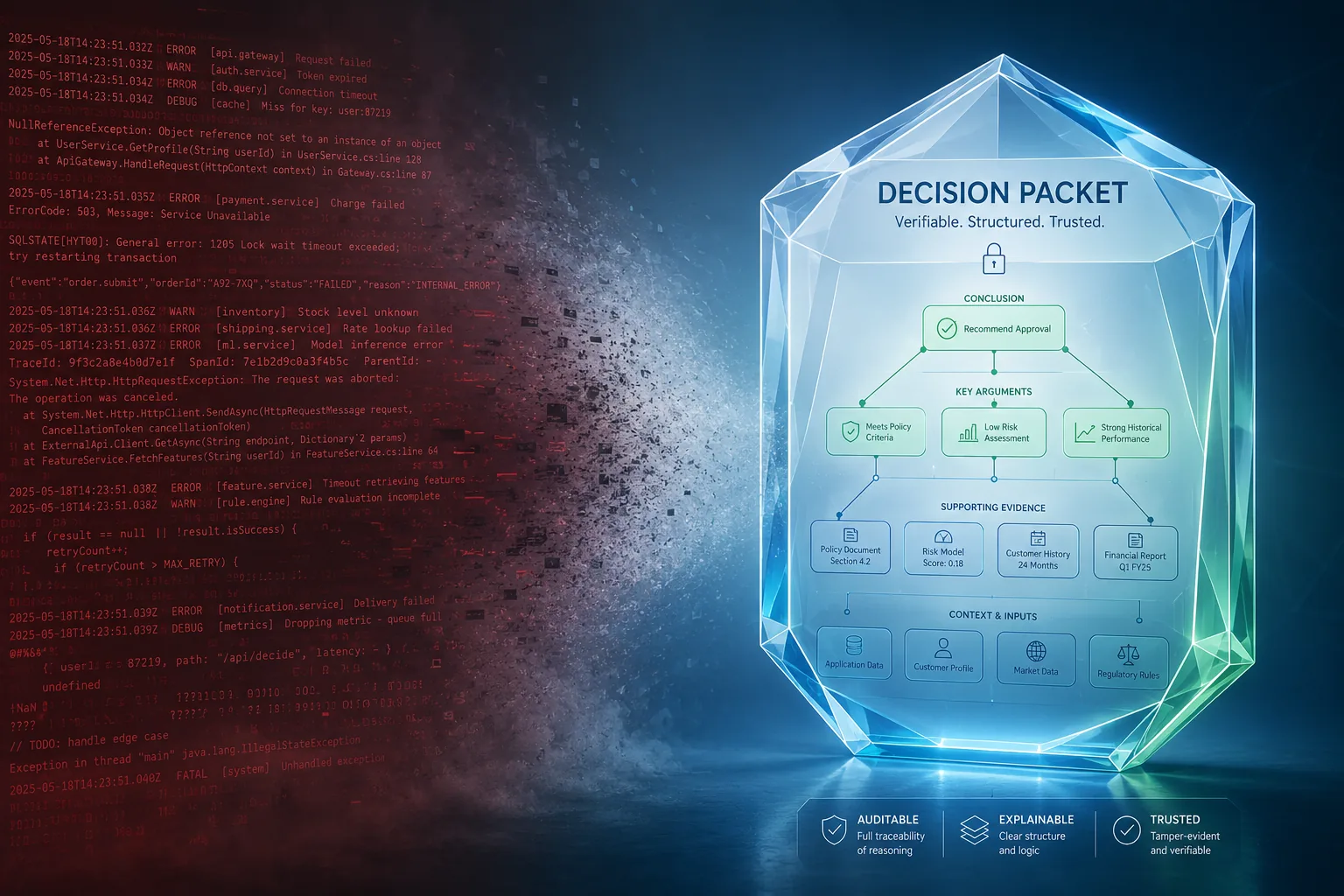
AI ਫੈਸਲਾ ਟ੍ਰੇਸਿੰਗ ਕੀ ਹੈ?
ਫੈਸਲਾ ਟ੍ਰੇਸਿੰਗ ਹਰ AI ਏਜੰਟ ਦੇ ਫੈਸਲੇ ਦੇ ਪਿੱਛੇ ਦੇ ਪੂਰੇ ਤਰਕ ਨੂੰ ਸੰਗਠਿਤ, ਆਡਿਟ ਕਰਨਯੋਗ ਆਰਟੀਫੈਕਟਾਂ ਦੇ ਤੌਰ 'ਤੇ ਕੈਦ ਕਰਨ ਦੀ ਪ੍ਰਕਿਰਿਆ ਹੈ। ਕਾਰਵਾਈ ਲੌਗਾਂ ਦੇ ਵਿਰੁੱਧ ਜੋ ਇਹ ਦਰਸਾਉਂਦੇ ਹਨ ਕਿ ਕੀ ਹੋਇਆ, ਫੈਸਲਾ ਟ੍ਰੇਸ ਇਹ ਦਰਸਾਉਂਦੇ ਹਨ ਕਿ ਇਹ ਕਿਉਂ ਹੋਇਆ — ਵਿਚਾਰ ਕੀਤੇ ਗਏ ਵਿਕਲਪ, ਸਬੂਤ, ਤਰਕ, ਅਤੇ ਚੋਣੀ ਗਈ ਤਰਕ। AIAgentree ਫੈਸਲਾ ਪੈਕੇਟਾਂ ਦੇ ਜ਼ਰੀਏ ਫੈਸਲਾ ਟ੍ਰੇਸਿੰਗ ਨੂੰ ਲਾਗੂ ਕਰਦਾ ਹੈ: ਸੀਲ ਕੀਤੇ ਗਏ ਰਿਕਾਰਡ ਜੋ ਪ੍ਰਸਤਾਵ, ਤਰਕ ਦਾ ਦਰੱਖਤ, ਸਬੂਤ ਦੇ ਸਨੈਪਸ਼ਾਟ, ਚੁਣੀ ਗਈ ਤਰਕ, ਅਤੇ ਨਤੀਜੇ ਦੀ ਟ੍ਰੈਕਿੰਗ ਨੂੰ ਸ਼ਾਮਲ ਕਰਦੇ ਹਨ। ਫੈਸਲਾ ਟ੍ਰੇਸਿੰਗ EU AI ਐਕਟ ਦੇ ਲੇਖ 12-14 ਦੇ ਅਨੁਕੂਲਤਾ ਨੂੰ ਯਕੀਨੀ ਬਣਾਉਂਦੀ ਹੈ, ਤਿੰਨ ਭਰੋਸੇ ਦੇ ਮੋਡਾਂ (ਮਨੁੱਖ-ਇਨ-ਦ-ਲੂਪ, ਮਨੁੱਖ-ਆਨ-ਦ-ਲੂਪ, ਪੂਰੀ ਆਟੋਨੋਮੀ) ਦਾ ਸਮਰਥਨ ਕਰਦੀ ਹੈ, ਅਤੇ ਪੂਰਵ ਨਿਯਮਾਂ ਦੇ ਰੂਪ ਵਿੱਚ ਸੰਸਥਾਗਤ ਯਾਦਾਸ਼ਤ ਬਣਾਉਂਦੀ ਹੈ। ਢਾਂਚਾ ਨਾਰਮੈਟਿਵ ਸੰਬੰਧਾਂ (ਸਮਰਥਨ/ਵਿਰੋਧ) ਨੂੰ ਵਰਣਨਾਤਮਕ ਸੰਬੰਧਾਂ (ਉਲਲੇਖ/ਸੰਬੰਧਿਤ) ਤੋਂ ਵੱਖਰਾ ਕਰਦਾ ਹੈ, ਜਿਸ ਨਾਲ AI ਤਰਕ ਨੂੰ ਪੁੱਛਣਯੋਗ, ਤੁਲਨਾਤਮਕ, ਅਤੇ ਉਲਲੇਖਯੋਗ ਬਣਾਉਂਦਾ ਹੈ।
ਜ਼ਿਆਦਾਤਰ ਸੰਗਠਨ ਲੌਗਿੰਗ (ਏਜੰਟ ਨੇ ਕੀ ਕੀਤਾ) ਨੂੰ ਫੈਸਲਾ ਟ੍ਰੇਸਿੰਗ (ਕੀ ਫੈਸਲਾ ਕੀਤਾ ਗਿਆ ਅਤੇ ਕਿਉਂ) ਨਾਲ ਗਲਤ ਸਮਝਦੇ ਹਨ। ਇਹ ਵੱਖਰਾ ਮਹੱਤਵਪੂਰਨ ਹੈ ਕਿਉਂਕਿ ਨਿਯਮ, ਸ਼ਾਸਨ, ਅਤੇ ਸੰਸਥਾਗਤ ਯਾਦਾਸ਼ਤ ਸਾਰੇ ਦੂਜੇ 'ਤੇ ਨਿਰਭਰ ਕਰਦੇ ਹਨ।
- •ਲੌਗ ਕਾਰਵਾਈ ਘਟਨਾਵਾਂ ਨੂੰ ਦਰਜ ਕਰਦੇ ਹਨ — API ਕਾਲਾਂ, ਦੇਰ, ਗਲਤੀਆਂ
- •ਫੈਸਲੇ ਦੇ ਨਿਸ਼ਾਨ ਸੰਰਚਿਤ ਤਰਕ ਨੂੰ ਕੈਦ ਕਰਦੇ ਹਨ — ਵਿਕਲਪ, ਸਬੂਤ, ਤਰਕ, ਨਤੀਜੇ
- •ਫੈਸਲਾ ਪੈਕੇਟ ਮੁਹਰਬੰਦ ਪਦਾਰਥ ਹਨ ਜਿਨ੍ਹਾਂ ਨੂੰ ਆਡੀਟਰ ਪੁੱਛਗਿੱਛ ਅਤੇ ਦੁਬਾਰਾ ਚਲਾਉਣ ਕਰ ਸਕਦੇ ਹਨ
- •ਪੂਰਵ ਨਜ਼ੀਰ ਸੰਰਚਿਤ ਫੈਸਲਿਆਂ ਤੋਂ ਆਪਣੇ ਆਪ ਉਭਰਦਾ ਹੈ — ਸੰਸਥਾਗਤ ਯਾਦਦਾਸ਼ਤ ਨੂੰ ਢਾਂਚੇ ਵਜੋਂ
ਇੱਕ ਨਿਯਮਕ ਨੇ ਹੁਣੇ ਹੀ ਤੁਹਾਡੇ ਏਆਈ ਦੁਆਰਾ ਕੀਤੇ ਗਏ ਆਖਰੀ 100 ਫੈਸਲਿਆਂ ਦੀ ਮੰਗ ਕੀਤੀ।
ਤੁਹਾਡੇ ਕੋਲ ਜਵਾਬ ਦੇਣ ਲਈ 30 ਦਿਨ ਹਨ। ਤੁਹਾਡੇ ਕੋਲ ਵਾਸਤਵ ਵਿੱਚ ਕੀ ਹੈ?
ਮੂਲ ਥੀਸਿਸ, ਦੁਬਾਰਾ ਪ੍ਰਸਤੁਤ ਕੀਤੀ ਗਈ
ਏਆਈ ਫੈਸਲਿਆਂ ਨੂੰ ਰਸੀਦਾਂ ਦੀ ਲੋੜ ਹੈ। ਲੌਗਿੰਗ ਜਵਾਬਦੇਹੀ ਨਹੀਂ ਹੈ। ਚੇਨ-ਆਫ-ਥੌਟ ਸੱਚਾਈ ਨਹੀਂ ਹੈ।
ਇਹ ਬਿਆਨ ਸੱਚੇ ਰਹਿੰਦੇ ਹਨ। ਪਰ ਇਹ ਅਧੂਰੇ ਹਨ।
ਸਵਾਲ "ਅਸੀਂ ਫੈਸਲਿਆਂ ਨੂੰ ਕਿਉਂ ਕੈਦ ਕਰਨਾ ਚਾਹੀਦਾ ਹੈ?" ਦਾ ਸਾਫ਼ ਜਵਾਬ ਹੈ: ਅਨੁਕੂਲਤਾ, ਜਵਾਬਦੇਹੀ, ਡਿਬੱਗਿੰਗ। ਮੁਸ਼ਕਲ ਸਵਾਲ ਹੈ: "ਜਦੋਂ ਅਸੀਂ ਇਹ ਕਰਦੇ ਹਾਂ ਤਾਂ ਕੀ ਹੁੰਦਾ ਹੈ?"
ਜਵਾਬ ਅਣਉਮੀਦ ਹੈ: ਸੰਸਥਾਗਤ ਯਾਦ ਆਟੋਮੈਟਿਕ ਬਣ ਜਾਂਦੀ ਹੈ. ਇਹ ਕਿਸੇ ਵਿਸ਼ੇਸ਼ਤਾ ਵਜੋਂ ਨਹੀਂ ਜੋ ਤੁਸੀਂ ਉੱਪਰ ਬਣਾਉਂਦੇ ਹੋ. ਨਾ ਹੀ ਕਿਸੇ ਮੋਡੀਊਲ ਵਜੋਂ ਜੋ ਤੁਸੀਂ ਬਾਅਦ ਵਿੱਚ ਜੋੜਦੇ ਹੋ. ਇਹ ਡੇਟਾ ਮਾਡਲ ਦਾ ਕੁਦਰਤੀ ਨਤੀਜਾ ਹੈ.
"ਫੈਸਲਾ" ਦਾ ਅਸਲ ਮਤਲਬ ਕੀ ਹੈ
ਇੱਕ ਫੈਸਲਾ ਮਾਡਲ ਦਾ ਨਤੀਜਾ ਨਹੀਂ ਹੈ। ਇਹ API ਦੀ ਪ੍ਰਤੀਕਿਰਿਆ ਨਹੀਂ ਹੈ। ਇਹ ਫੰਕਸ਼ਨ ਦੀ ਵਾਪਸੀ ਦੀ ਕੀਮਤ ਨਹੀਂ ਹੈ।
ਇੱਕ ਫੈਸਲਾ ਇੱਕ ਸੰਰਚਿਤ ਕਲਾ ਹੈ ਜਿਸ ਵਿੱਚ ਸ਼ਾਮਲ ਹੈ:
- •ਪ੍ਰਸਤਾਵ — ਕੀ ਫੈਸਲਾ ਕੀਤਾ ਜਾ ਰਿਹਾ ਸੀ (ਲੋਨ #1234 ਦੀ ਮਨਜ਼ੂਰੀ)
- •ਭਰਤੀ ਕੀਤੀ ਗਈ ਸਬੂਤ — ਤੱਥ ਜੋ ਸਲਾਹ-ਮਸ਼ਵਰਾ ਕੀਤਾ ਗਿਆ, ਫੈਸਲੇ ਦੇ ਸਮੇਂ 'ਤੇ ਜਮ੍ਹਾ ਕੀਤਾ ਗਿਆ
- •ਵਿਚਾਰਿਆ ਗਿਆ ਵਿਕਲਪ — ਵਿਕਲਪ ਜੋ ਮੁਲਾਂਕਣ ਕੀਤੇ ਗਏ ਅਤੇ ਰੱਦ ਕੀਤੇ ਗਏ
- •ਚੁਣਿਆ ਗਿਆ ਤਰਕ — ਕਿਹੜੇ ਦਲੀਲਾਂ ਨੇ ਫੈਸਲੇ ਨੂੰ ਪ੍ਰਭਾਵਿਤ ਕੀਤਾ
- •ਰਿਕਾਰਡ ਕੀਤਾ ਨਤੀਜਾ — ਬਾਅਦ ਵਿੱਚ ਕੀ ਹੋਇਆ (ਤੁਰੰਤ, 6 ਮਹੀਨੇ, 1 ਸਾਲ)
ਇਹ ਉਹ ਹੈ ਜਿਸਨੂੰ AIAgentree ਫੈਸਲਾ ਪੈਕੇਟ ਕਹਿੰਦਾ ਹੈ — ਇੱਕ ਸੀਲ ਕੀਤਾ ਹੋਇਆ, ਅਟਲ ਰਿਕਾਰਡ ਜੋ ਆਡੀਟਰ ਪੁੱਛ ਸਕਦੇ ਹਨ, ਦੁਬਾਰਾ ਚਲਾਉਣ ਅਤੇ ਉਲਲੇਖਿਤ ਕਰਨ ਲਈ।
ਲੌਗ ਤੁਹਾਨੂੰ ਕੀ ਨਹੀਂ ਦੱਸਦੇ
| ਐਕਜ਼ਿਕਿਊਸ਼ਨ ਲੌਗ | ਫੈਸਲਾ ਟਰੇਸ |
|---|---|
ਲੋਨ ਮਨਜ਼ੂਰ ਕਰੋ(application_id=1234, score=0.87) | ਸਿਫਾਰਸ਼: ਲੋਨ #1234 ਦੀ ਮਨਜ਼ੂਰੀ ਫਾਇਦਾ: ਆਮਦਨ ਦੀ ਪੁਸ਼ਟੀ ਪਾਸ ਹੋ ਗਈ (ਭਾਰ: 0.92) ਫਾਇਦਾ: 3 ਸਾਲਾਂ ਦੀ ਨੌਕਰੀ ਦਾ ਇਤਿਹਾਸ (ਭਾਰ: 0.85) ਨੁਕਸਾਨ: ਕਰੈਡਿਟ ਸਕੋਰ ਥ੍ਰੈਸ਼ਹੋਲਡ ਤੋਂ ਹੇਠਾਂ (ਭਾਰ: 0.78) ਓਵਰਰਾਈਡ: ਸੀਨੀਅਰ ਵਿਸ਼ਲੇਸ਼ਕ ਦੁਆਰਾ ਮੈਨੁਅਲ ਅਪਵਾਦ ਮਨਜ਼ੂਰ ਕੀਤਾ ਗਿਆ ਤਰਕ: ਨੌਕਰੀ ਦੀ ਸਥਿਰਤਾ ਕਰੈਡਿਟ ਚਿੰਤਾ ਤੋਂ ਵੱਧ ਹੈ ਨਤੀਜਾ (6ਮਹੀਨੇ): 0 ਛੱਡੀਆਂ ਗਈਆਂ ਭੁਗਤਾਨ |
| ਕੀ ਹੋਇਆ। ਕਦੋਂ ਹੋਇਆ। ਇਹਨੂੰ ਕਿੰਨਾ ਸਮਾਂ ਲੱਗਾ। | ਇਹ ਕਿਉਂ ਫੈਸਲਾ ਕੀਤਾ ਗਿਆ। ਕੀ ਵਿਚਾਰਿਆ ਗਿਆ। ਬਾਅਦ ਵਿੱਚ ਕੀ ਹੋਇਆ। |
ਲੌਗ ਤੁਹਾਨੂੰ ਦੱਸਦਾ ਹੈ ਕਿ ਕਰਜ਼ਾ ਮਨਜ਼ੂਰ ਕੀਤਾ ਗਿਆ ਸੀ। ਟਰੇਸ ਤੁਹਾਨੂੰ ਦੱਸਦਾ ਹੈ ਕਿਉਂ ਇਹ ਮਨਜ਼ੂਰ ਕੀਤਾ ਗਿਆ ਸੀ ਜਦੋਂ ਕਿ ਕਰੈਡਿਟ ਸਕੋਰ ਦੀ ਚਿੰਤਾ ਸੀ, ਕਿਸਨੇ ਛੋਟ ਦੀ ਆਗਿਆ ਦਿੱਤੀ, ਅਤੇ ਕੀ ਉਹ ਫੈਸਲਾ ਚੰਗਾ ਸਾਬਤ ਹੋਇਆ।
ਦੋ ਪ੍ਰਾਚੀਨ
ਪੂਰੇ ਫੈਸਲਾ ਟ੍ਰੇਸਿੰਗ ਸਿਸਟਮ ਦੋ ਪ੍ਰਾਥਮਿਕਾਂ 'ਤੇ ਆਧਾਰਿਤ ਹੈ:
ਪ੍ਰਾਚੀਨ 1: ਤਰਕ ਦਾ ਟਿਕਾਊ ਰਿਕਾਰਡ
ਨਹੀਂ "ਜੋ ਮਾਡਲ ਨੇ ਕਿਹਾ।" ਇੱਕ ਸੰਰਚਿਤ ਦਲੀਲ ਗ੍ਰਾਫ ਜਿਸ ਵਿੱਚ ਦਾਅਵੇ, ਸੰਬੰਧ (ਸਹਾਇਤਾ/ਵਿਰੋਧ), ਸਬੂਤ ਦੇ ਹਵਾਲੇ, ਅਤੇ ਪਦਰੂਪ ਹੈ।
ਪ੍ਰਾਚੀਨ 2: ਨਤੀਜਿਆਂ ਦਾ ਟਿਕਾਊ ਰਿਕਾਰਡ
ਨਹੀਂ "ਮਾਡਲ ਨੇ 200 ਠੀਕ ਵਾਪਸ ਕੀਤਾ।" ਇੱਕ ਮੋਹਰਬੰਦੀ ਫੈਸਲਾ ਰਿਕਾਰਡ ਜਿਸ ਵਿੱਚ ਨਤੀਜਾ, ਤਰਕ ਤਰਕ, ਫੈਸਲਾ ਕਰਨ ਵਾਲਾ, ਅਤੇ ਤਿੰਨ-ਹਰਿਜ਼ਨ ਟ੍ਰੈਕਿੰਗ ਹੈ।
ਜਦੋਂ ਤੁਹਾਡੇ ਕੋਲ ਦੋਹਾਂ ਹੁੰਦੇ ਹਨ, ਤਾਂ ਨਜ਼ਿਰਾਨਾ ਹੁਣ ਕੁਝ ਐਸਾ ਨਹੀਂ ਰਹਿੰਦਾ ਜਿਸਨੂੰ ਤੁਸੀਂ "ਯਾਦ" ਕਰਦੇ ਹੋ। ਇਹ ਕੁਝ ਬਣ ਜਾਂਦਾ ਹੈ ਜਿਸਨੂੰ ਤੁਸੀਂ ਪੁੱਛ ਸਕਦੇ ਹੋ, ਤੁਲਨਾ ਕਰ ਸਕਦੇ ਹੋ, ਅਤੇ ਉਲਲੇਖ ਕਰ ਸਕਦੇ ਹੋ।
ਕਿਉਂ ਨਾਰਮਟਿਵ ਵਰਣਨਾਤਮਕ ਨੂੰ ਹਰਾਉਂਦਾ ਹੈ
ਸੰਦਰਭ ਗ੍ਰਾਫ ਵਰਣਾਤਮਕ ਸੰਬੰਧਾਂ ਨੂੰ ਸਟੋਰ ਕਰਦੇ ਹਨ: "ਸੰਬੰਧਿਤ," "ਉਲਲੇਖ," "ਮਾਲਕ ਹੈ।" ਫੈਸਲਾ ਤਰਕ ਗ੍ਰਾਫ ਨਿਯਮਕ ਸੰਬੰਧਾਂ ਨੂੰ ਸਟੋਰ ਕਰਦੇ ਹਨ: "ਸਹਾਇਤਾ ਕਰਦਾ ਹੈ," "ਵਿਰੋਧ ਕਰਦਾ ਹੈ।"
ਇਹ ਫਰਕ ਬੁਨਿਆਦੀ ਹੈ:
- •ਵਰਣਨਾਤਮਕ: "ਇਸ ਟਿਕਟ ਵਿੱਚ ਇਸ ਗਾਹਕ ਦਾ ਜਿਕਰ ਕੀਤਾ ਗਿਆ ਹੈ"
- •ਨਿਯਮਤ: "ਇਹ ਸਬੂਤ ਸਹਾਇਤਾ ਕਰਦਾ ਹੈ ਮਨਜ਼ੂਰੀ ਲਈ ਕਿਉਂਕਿ ਇਹ ਲਗਾਤਾਰ ਭੁਗਤਾਨ ਇਤਿਹਾਸ ਨੂੰ ਦਰਸਾਉਂਦਾ ਹੈ"
ਨਿਯਮਤਮਕ ਢਾਂਚਾ ਵਿਆਖਿਆ, ਪ੍ਰਬੰਧਨ ਅਤੇ ਨਜ਼ਿਰਾਨਾ ਦੀ ਆਗਿਆ ਦਿੰਦਾ ਹੈ। ਵਰਣਨਾਤਮਕ ਢਾਂਚਾ ਖੋਜ ਅਤੇ ਖੋਜ ਕਰਨ ਦੀ ਆਗਿਆ ਦਿੰਦਾ ਹੈ। ਦੋਹਾਂ ਦੀ ਕੀਮਤ ਹੈ। ਸਿਰਫ ਇੱਕ ਸੰਸਥਾਗਤ ਫੈਸਲੇ ਦੀ ਆਗਿਆ ਦਿੰਦਾ ਹੈ।
ਕਿਵੇਂ ਨਜ਼ਿਰ (ਮਕੈਨਿਕਲੀ) ਉਭਰਦੀ ਹੈ
ਫਲਾਈਵੀਲ
ਏਜੰਟ ਪ੍ਰੋ/ਕਨ ਵਾਦ-ਵਿਵਾਦ ਦਰੱਖਤ ਬਣਾਉਂਦਾ ਹੈ
ਮਨੁੱਖ ਮਨਜ਼ੂਰ/ਰੱਦ ਕਰਦੇ ਹਨ + ਚੋਣ ਕਰਦੇ ਹਨ ਤਰਕਸੰਗਤ ਦਲੀਲਾਂ
ਫੈਸਲਾ ਮੁਹਰਬੰਦ ਹੈ → ਕੇਸ ਰਿਕਾਰਡ ਜਮ੍ਹਾ ਕੀਤਾ ਗਿਆ
ਅਗਲਾ ਫੈਸਲਾ: ਏਜੰਟ ਉਸ ਮਾਮਲੇ ਦੀ ਖੋਜ ਕਰਦਾ ਹੈ ਅਤੇ ਉਸਦਾ ਹਵਾਲਾ ਦਿੰਦਾ ਹੈ
ਪੂਰਵ ਨਜ਼ੀਰ ਨਵੇਂ ਮਾਮਲੇ ਵਿੱਚ ਇੱਕ ਦਲੀਲ ਨੋਡ ਬਣ ਜਾਂਦਾ ਹੈ
ਸੰਸਥਾ "ਅਸੀਂ ਕਿਵੇਂ ਫੈਸਲਾ ਕਰਦੇ ਹਾਂ" ਪੈਟਰਨਾਂ ਦੀ ਇੱਕ ਲਾਇਬ੍ਰੇਰੀ ਬਣਾਉਂਦੀ ਹੈ
ਪੈਟਰਨ ਸੁਰੱਖਿਅਤ ਆਟੋਮੇਸ਼ਨ (ਪੂਰਵ ਨਿਰਧਾਰਿਤ ਸੁਤੰਤਰਤਾ) ਦੀ ਆਗਿਆ ਦਿੰਦੇ ਹਨ।
ਤੁਹਾਨੂੰ ਸੰਸਥਾਗਤ ਯਾਦ ਸਧਾਰਨ ਵਰਤੋਂ ਦੇ ਉਪਉਤਪਾਦ ਵਜੋਂ ਮਿਲਦੀ ਹੈ, ਨਾ ਕਿ ਇੱਕ ਵੱਖਰੇ ਉਪਰਾਲੇ ਵਜੋਂ।
ਸੰਭਾਲੇ ਹੋਏ ਤੋਂ ਪ੍ਰਾਪਤ ਕਰਨ ਯੋਗ: ਫੈਸਲੇ ਇੱਕ ਗ੍ਰਾਫ ਵਜੋਂ
ਫੈਸਲਿਆਂ ਨੂੰ ਕੈਦ ਕਰਨਾ ਸਿਰਫ ਅੱਧਾ ਮੁੱਲ ਹੈ। ਦੂਜਾ ਅੱਧਾ ਉਹਨਾਂ ਨੂੰ ਵਾਪਸ ਲੈਣਾ ਹੈ — ਅਤੇ ਇੱਥੇ ਡਾਟਾ ਮਾਡਲ ਆਪਣੀ ਕੀਮਤ ਕਮਾਉਂਦਾ ਹੈ। ਕਿਉਂਕਿ ਹਰ ਫੈਸਲਾ ਇੱਕ ਨਾਰਮਟਿਵ ਆਰਗੁਮੈਂਟ ਗ੍ਰਾਫ ਵਜੋਂ ਸਟੋਰ ਕੀਤਾ ਜਾਂਦਾ ਹੈ (ਦਾਅਵੇ ਜੋ ਸਹਾਰਾ ਦਿੰਦੇ/ਵਿਰੋਧ ਕਰਦੇ ਕਿਨਾਰਿਆਂ ਨਾਲ ਜੁੜੇ ਹੁੰਦੇ ਹਨ), ਇਹ ਇੱਕ ਪਹਿਲੀ ਦਰਜੇ ਦੀ ਰੀਟ੍ਰੀਵਲ ਸਬਸਟ੍ਰੇਟ ਬਣ ਜਾਂਦਾ ਹੈ, ਸਿਰਫ ਇੱਕ ਆਰਕਾਈਵ ਨਹੀਂ।
ਕੱਚੇ ਲੌਗਾਂ 'ਤੇ ਇੱਕ ਵੇਕਟਰ ਖੋਜ ਨਿਸ਼ਾਨਿਤ ਕਰੋ ਅਤੇ ਤੁਹਾਨੂੰ "ਚੰਕ ਸੂਪ" ਮਿਲਦਾ ਹੈ — ਅਸੰਬੰਧਿਤ ਟੁਕੜੇ ਜੋ ਇੱਕ ਨਤੀਜੇ ਦਾ ਉਲਲੇਖ ਕਰਦੇ ਹਨ ਪਰ ਵਿਰੋਧੀ ਦਲੀਲ, ਮਨਜ਼ੂਰ ਕਰਨ ਵਾਲਾ, ਅਤੇ ਨਜ਼ਿਰਾਨਾ ਛੱਡ ਦਿੰਦੇ ਹਨ। ਬਦਲੇ ਵਿੱਚ ਫੈਸਲੇ ਦੇ ਗ੍ਰਾਫ ਤੋਂ ਪ੍ਰਾਪਤ ਕਰੋ ਅਤੇ ਤੁਹਾਨੂੰ ਇੱਕ ਸੀਮਿਤ ਫੈਸਲਾ ਪੈਕੇਟ ਮਿਲਦਾ ਹੈ: ਪ੍ਰਸਤਾਵ, ਹੱਕ ਵਿੱਚ ਅਤੇ ਵਿਰੋਧ ਵਿੱਚ ਤਰਕ, ਸਬੂਤ, ਅਤੇ ਨਤੀਜਾ, ਬਿਨਾਂ ਕਿਸੇ ਤਬਦੀਲੀ ਦੇ। ਇਹ AI ਫੈਸਲਿਆਂ ਲਈ GraphRAG ਹੈ — ਕਾਰਨ ਨਜ਼ਿਰਾਨਾ ਕੁਝ ਹੈ ਜਿਸ ਨੂੰ ਤੁਸੀਂ ਪੁੱਛ ਸਕਦੇ ਹੋ ਅਤੇ ਉਲਲੇਖ ਕਰ ਸਕਦੇ ਹੋ, ਨਾ ਕਿ ਸਿਰਫ ਕੁਝ ਜੋ ਤੁਸੀਂ ਯਾਦ ਰੱਖਣ ਦੀ ਉਮੀਦ ਕਰਦੇ ਹੋ। (ਪ੍ਰਾਪਤੀ ਦੇ ਆਧਾਰ 'ਤੇ ਹੋਰ: ਫੈਸਲਾ ਪ੍ਰਾਪਤੀ ਕੀ ਹੈ.)
ਭਰੋਸੇ ਦੇ ਤਿੰਨ ਮੋਡ
ਉਦਯੋਗ ਰਾਤੋ-ਰਾਤ ਏਆਈ ਨੂੰ ਫੈਸਲੇ ਨਹੀਂ ਸੌਂਪਦੇ। ਉਹ ਮੋਡਾਂ ਰਾਹੀਂ ਅੱਗੇ ਵਧਦੇ ਹਨ:
ਇਨਸਾਨ-ਇਨ-ਲੂਪ
ਏਜੰਟ ਸਹਾਇਤਾ ਕਰਦਾ ਹੈ, ਮਨੁੱਖ ਫੈਸਲਾ ਕਰਦਾ ਹੈ। ਏਜੰਟ ਤਰਕ ਪੈਦਾ ਕਰਦਾ ਹੈ; ਇੱਕ ਮਨੁੱਖ ਅੰਤਿਮ ਫੈਸਲਾ ਕਰਦਾ ਹੈ।
ਮਨੁੱਖ-ਤੇ-ਲੂਪ
ਏਜੰਟ ਫੈਸਲੇ ਕਰਦਾ ਹੈ, ਮਨੁੱਖ ਨਿਗਰਾਨੀ ਕਰਦਾ ਹੈ। ਏਜੰਟ ਫੈਸਲੇ ਲੈਂਦਾ ਹੈ; ਇੱਕ ਮਨੁੱਖ ਸਮੀਖਿਆ ਕਰ ਸਕਦਾ ਹੈ ਅਤੇ ਉਲਟ ਸਕਦਾ ਹੈ।
ਪੂਰੀ ਆਜ਼ਾਦੀ
ਏਜੰਟ ਫੈਸਲਾ ਕਰਦਾ ਹੈ, ਮਨੁੱਖੀ ਆਡਿਟ ਸਮੇਂ-ਸਮੇਂ 'ਤੇ ਹੁੰਦੇ ਹਨ। ਸੁਤੰਤਰ ਕਾਰਵਾਈ ਲਈ ਕਾਫੀ ਨਜ਼ਿਰਾਨਾ ਮੌਜੂਦ ਹੈ।
ਮੋਡ ਪ੍ਰਗਤੀ ਸਬੂਤ-ਆਧਾਰਿਤ ਹੈ: ਵਿਸ਼ਵਾਸ ≥ 95%, ਸਮਾਨ ਪੂਰਵ ਨਜ਼ਿਰਾਂ ≥ 5 ਜੋ ਸਥਿਰ ਨਤੀਜੇ ਦਿੰਦੇ ਹਨ, ਪੈਟਰਨ ਸਥਾਪਿਤ ਅਤੇ ਪ੍ਰਮਾਣਿਤ ਹੈ। ਇਹ "ਭਰੋਸਾ ਕਰੋ ਪਰ ਜਾਂਚੋ" ਨਹੀਂ ਹੈ। ਇਹ "ਜਾਂਚੋ, ਫਿਰ ਭਰੋਸਾ ਕਰੋ, ਫਿਰ ਜਾਂਚ ਕਰਦੇ ਰਹੋ।"
ਇਹ ਕਾਰੋਬਾਰੀ ਏਆਈ ਸਟੈਕ ਲਈ ਕੀ ਮਤਲਬ ਹੈ
ਉਦਯੋਗ ਸੰਦਰਭ ਸਟੈਕ
- •ਪਰਤ C: ਵਿਚਾਰ-ਵਿਮਰਸ਼ — ਇਹ ਕਿਉਂ ਫੈਸਲਾ ਕੀਤਾ ਗਿਆ? ਫਾਇਦੇ/ਨੁਕਸਾਨ ਦੇ ਦਰੱਖਤ, ਨਜ਼ਿਰਾਨਾ ਹਵਾਲੇ, ਸਬੂਤ ਦੀ ਮੂਲਤਾ
- •ਪਰਤ ਬ: ਫੈਸਲਾ ਵੰਸ਼ — ਕੀ ਫੈਸਲਾ ਕੀਤਾ ਗਿਆ? ਨਤੀਜਾ, ਵਿਸ਼ਵਾਸ, ਨੀਤੀਆਂ ਦਾ ਮੁਲਾਂਕਣ, ਮਨਜ਼ੂਰੀਆਂ
- •ਪਰਤ ਏ: ਕਾਰਜਕਾਰੀ ਸੰਦਰਭ — ਕੌਣ/ਕੀ ਸ਼ਾਮਲ ਹੈ? ਇਕਾਈਆਂ, ਸੰਬੰਧ, ਕਾਲੀਨ ਸਥਿਤੀ (CRM, ERP)
ਜ਼ਿਆਦਾਤਰ ਟੀਮਾਂ A ਬਣਾਉਂਦੀਆਂ ਹਨ। ਕੁਝ B ਬਣਾਉਂਦੀਆਂ ਹਨ। ਲਗਭਗ ਕੋਈ ਵੀ C ਨੂੰ ਚੰਗੀ ਤਰ੍ਹਾਂ ਨਹੀਂ ਬਣਾਉਂਦਾ। AIAgentree C ਪ੍ਰਦਾਨ ਕਰਦਾ ਹੈ।
ਜੁੜਨ ਦੇ ਤਿੰਨ ਤਰੀਕੇ — SDK ਸਿਰਫ ਇੱਕ ਹੈ
ਫੈਸਲਾ ਟ੍ਰੇਸਿੰਗ 6 ਮਹੀਨੇ ਦੀ ਸਲਾਹਕਾਰ ਸੇਵਾ ਨਹੀਂ ਹੈ — ਅਤੇ ਇਸ ਲਈ ਸਾਡੇ SDK ਦੀ ਲੋੜ ਨਹੀਂ ਹੈ। ਜੁੜਨ ਦੇ ਤਿੰਨ ਤਰੀਕੇ ਹਨ:
- •MCP (ਏਜੰਟ-ਦੇਸ਼ੀ) — ਸੰਦਾਂ ਦੇ ਪੂਰੇ ਜੀਵਨ ਚੱਕਰ, ਅੰਤ ਤੋਂ ਅੰਤ: ਇੱਕ ਟਰੇਸ ਬਣਾਓ, ਤਰਕ ਨੂੰ ਦਰਜ ਕਰੋ, ਫੈਸਲੇ ਨੂੰ ਸੀਲ ਕਰੋ (
create_trace,append_events,seal_decision) ਅਤੇ ਤੁਰੰਤ ਫੈਸਲਾ ਪੈਕੇਟ ਪ੍ਰਾਪਤ ਕਰੋ (get_packet,search_precedents) — ਕੋਈ ਲਾਇਬ੍ਰੇਰੀ ਇੰਸਟਾਲ ਕਰਨ ਦੀ ਲੋੜ ਨਹੀਂ - •REST API — ਕਿਸੇ ਵੀ ਭਾਸ਼ਾ, ਕਿਸੇ ਵੀ ਰਨਟਾਈਮ, ਜ਼ੀਰੋ ਨਿਰਭਰਤਾ (SDK ਇਨ੍ਹਾਂ ਐਂਡਪੋਇੰਟਸ 'ਤੇ ਇੱਕ ਪਤਲਾ ਵ੍ਰੈਪਰ ਹੈ)
- •SDK (Python / TypeScript) — ਸੁਵਿਧਾਜਨਕ ਵਿਕਲਪ, ਜੋ ਤੁਹਾਡੇ ਏਜੰਟ ਦੇ ਨਿਕਾਸ ਤੋਂ ਤਰਕ ਦੀ ਆਟੋ-ਨਿਕਾਸ ਕਰਦਾ ਹੈ
SDK ਦਾ ਰਸਤਾ ਲਿਖਣ ਲਈ ਸਭ ਤੋਂ ਛੋਟਾ ਹੈ — ਲਗਭਗ ਦਸ ਲਾਈਨਾਂ ਵਿੱਚ ਇੱਕ ਫੈਸਲਾ ਪਛਾਣ:
from aiagentree import AgentreeClient

client = AgentreeClient(api_key="ask_...", base_url="https://api.aiagentree.com", tenant_id="acme")

# Trace your agent's decision point
trace = client.start_trace(
    agent_id="discount-agent",
    workflow_id="discount_approval",
    entity_type="request",
    entity_id="4521",
)
trace.add_input("discount", 0.18, source="crm")
trace.add_step("s1", title="SEV-1 incident yesterday", category="evidence", confidence=0.9)
trace.add_step("s2", title="Customer flagged as churn risk", category="evidence", confidence=0.85)
trace.add_step("s3", title="Exceeds standard 15% threshold", category="risk", confidence=0.7)
trace.seal("d1", action="approved", confidence=0.9)
ਟਰੇਸ ਸੀਲ ਕੀਤਾ ਗਿਆ ਹੈ, ਟਾਈਮਸਟੈਂਪ ਕੀਤਾ ਗਿਆ ਹੈ, ਅਤੇ ਪੁੱਛਗਿੱਛ ਕਰਨ ਯੋਗ ਹੈ। ਜਦੋਂ ਅਗਲੀ ਸਮਾਨ ਬੇਨਤੀ ਆਉਂਦੀ ਹੈ, ਉਹ ਪ੍ਰੀਸੀਡੈਂਟ ਪ੍ਰਾਪਤ ਕੀਤਾ ਜਾ ਸਕਦਾ ਹੈ ਅਤੇ ਉਲਲੇਖਿਤ ਕੀਤਾ ਜਾ ਸਕਦਾ ਹੈ।
ਕੰਪਲਾਇੰਸ ਕੋਣ
ਯੂਰਪੀ ਯੂਨੀਅਨ ਦੇ ਏਆਈ ਐਕਟ ਨੇ ਉੱਚ-ਖਤਰੇ ਵਾਲੇ ਏਆਈ ਸਿਸਟਮਾਂ ਲਈ ਵਿਸ਼ੇਸ਼ ਮੰਗਾਂ ਦੀ ਪਾਲਣਾ ਕਰਨ ਦੀ ਲੋੜ ਰੱਖੀ ਹੈ:
- •ਲੇਖ 12 — ਆਟੋਮੈਟਿਕ ਲੌਗਿੰਗ ਜੋ ਫੈਸਲਿਆਂ ਦੀ ਪਛਾਣ ਅਤੇ ਖਤਰੇ ਦੀ ਪਛਾਣ ਦੀ ਯੋਗਤਾ ਦਿੰਦੀ ਹੈ
- •ਲੇਖ 13 — ਤਰੱਕੀਕਾਰਾਂ ਅਤੇ ਉਪਭੋਗਤਾਵਾਂ ਨੂੰ ਜਾਣਕਾਰੀ ਦੀ ਪੇਸ਼ਕਸ਼ ਅਤੇ ਪਾਰਦਰਸ਼ਤਾ
- •ਲੇਖ 14 — ਮਨੁੱਖੀ ਨਿਗਰਾਨੀ ਉਪਾਅ ਜੋ ਦਖਲਅੰਦਾਜ਼ੀ ਅਤੇ ਸਮਝਣ ਦੀ ਯੋਗਤਾ ਨੂੰ ਯੋਗ ਬਣਾਉਂਦੇ ਹਨ
ਫੈਸਲੇ ਦੇ ਨਿਸ਼ਾਨ ਇਨ੍ਹਾਂ ਜ਼ਰੂਰਤਾਂ ਨੂੰ ਪੂਰਾ ਕਰਦੇ ਹਨ, ਜੋ ਸੰਰਚਿਤ ਤਰਕ, ਸਬੂਤ ਦੀ ਮੂਲ, ਮਨੁੱਖੀ ਨਿਗਰਾਨੀ ਕਾਰਵਾਈਆਂ ਅਤੇ ਨਤੀਜੇ ਦੇ ਰਿਕਾਰਡ ਨੂੰ ਕੈਦ ਕਰਦੇ ਹਨ — ਇੱਕ ਐਸੇ ਫਾਰਮੈਟ ਵਿੱਚ ਜਿਸਨੂੰ ਨਿਯਮਕ ਵਾਸਤਵ ਵਿੱਚ ਪੁੱਛ ਸਕਦੇ ਹਨ ਅਤੇ ਸਮਝ ਸਕਦੇ ਹਨ।
ਦਸੰਬਰ 2027 ਦੀ ਮਿਆਦ: ਐਨੈਕਸ III ਦੇ ਅਧੀਨ ਉੱਚ-ਖਤਰੇ ਵਾਲੇ ਏਆਈ ਸਿਸਟਮਾਂ ਨੂੰ ਲੌਗਿੰਗ ਅਤੇ ਪਛਾਣਯੋਗਤਾ ਦੀਆਂ ਲੋੜਾਂ ਦੀ ਪਾਲਣਾ ਕਰਨੀ ਚਾਹੀਦੀ ਹੈ। ਜੇ ਤੁਹਾਡੇ ਏਆਈ ਏਜੰਟ ਕਰਜ਼ੇ, ਰੋਜ਼ਗਾਰ, ਸਿੱਖਿਆ ਜਾਂ ਸਿਹਤ ਸੇਵਾਵਾਂ ਬਾਰੇ ਫੈਸਲੇ ਲੈਂਦੇ ਹਨ, ਤਾਂ ਘੜੀ ਚੱਲ ਰਹੀ ਹੈ।
ਕਿਹੜੀਆਂ ਫੈਸਲਾ ਟ੍ਰੇਸਿੰਗ ਸਮੱਸਿਆਵਾਂ ਦਾ ਹੱਲ ਨਹੀਂ ਕਰਦੀ
ਫੈਸਲਾ ਟ੍ਰੇਸਿੰਗ ਸੰਚਾਲਕੀ ਸੰਦਰਭ ਦੇ ਉੱਪਰ ਬੈਠਦੀ ਹੈ। ਇਹ ਬਦਲਦੀ ਨਹੀਂ:
- •CRM/ERP ਸਿਸਟਮ — ਤੁਹਾਨੂੰ ਅਜੇ ਵੀ ਆਪਣੇ ਰਿਕਾਰਡ ਸਿਸਟਮ ਦੀ ਲੋੜ ਹੈ
- •ਨਿਗਰਾਨੀ ਦੇ ਟੂਲ — LangSmith, W&B, Arize ਅਜੇ ਵੀ ਮਾਡਲ ਦੀ ਸਿਹਤ ਦੀ ਨਿਗਰਾਨੀ ਕਰਦੇ ਹਨ
- •ਪਛਾਣ ਹੱਲ — ਤੁਹਾਨੂੰ ਹਾਲੇ ਵੀ ਪ੍ਰਣਾਲੀਆਂ ਵਿੱਚ ਇਕਾਈ ਲਿੰਕਿੰਗ ਦੀ ਲੋੜ ਹੈ
ਇਹ ਟੂਲ ਵੱਖ-ਵੱਖ ਪੱਧਰਾਂ 'ਤੇ ਵੱਖ-ਵੱਖ ਸਮੱਸਿਆਵਾਂ ਦਾ ਹੱਲ ਕਰਦੇ ਹਨ। AIAgentree ਉਹ ਇਕ ਕਲਾ ਪਦਾਰਥ ਕੈਦ ਕਰਦਾ ਹੈ ਜਿਸ ਦੀ ਉਨ੍ਹਾਂ ਸਭ ਨੂੰ ਲੋੜ ਹੈ ਪਰ ਇਤਿਹਾਸਕ ਤੌਰ 'ਤੇ ਕਿਸੇ ਨੇ ਵੀ ਸਟੋਰ ਨਹੀਂ ਕੀਤਾ: ਫੈਸਲਾ ਖੁਦ।
ਕਿਵੇਂ ਸ਼ੁਰੂ ਕਰਨਾ ਹੈ
ਆਪਣੇ ਉੱਚ-ਦਾਅਵੇ ਵਾਲੇ ਫੈਸਲੇ ਦੇ ਬਿੰਦੂਆਂ ਦੀ ਪਛਾਣ ਕਰੋ
ਕਿਹੜੇ ਏਜੰਟ ਦੇ ਫੈਸਲੇ ਗਾਹਕਾਂ, ਅਨੁਕੂਲਤਾ ਜਾਂ ਆਮਦਨ ਨੂੰ ਪ੍ਰਭਾਵਿਤ ਕਰਦੇ ਹਨ? ਇੱਥੋਂ ਸ਼ੁਰੂ ਕਰੋ।
10-ਲਾਈਨ SDK ਨੂੰ ਇੰਟੀਗਰੇਟ ਕਰੋ
ਆਪਣੇ ਮੌਜੂਦਾ ਏਜੰਟ ਲੋਜਿਕ ਨੂੰ ਟਰੇਸ ਕੈਪਚਰ ਨਾਲ ਲਪੇਟੋ। ਦੁਬਾਰਾ ਲਿਖਣ ਦੀ ਲੋੜ ਨਹੀਂ।
ਰੇਗੂਲੇਟਰ ਦੇ ਸਵਾਲ ਦਾ ਜਵਾਬ ਦਿਓ
ਇੱਕ ਏਜੰਟ ਚੁਣੋ ਅਤੇ ਪੁੱਛੋ: "ਜੇਕਰ ਇੱਕ ਨਿਯਮਕ ਨੇ ਪਿਛਲੇ 100 ਫੈਸਲਿਆਂ ਦੀ ਮੰਗ ਕੀਤੀ, ਕੀ ਮੈਂ ਜਵਾਬ ਦੇ ਸਕਦਾ ਹਾਂ?"
ਅਕਸਰ ਪੁੱਛੇ ਜਾਣ ਵਾਲੇ ਸਵਾਲ
AI ਏਜੰਟਾਂ ਲਈ ਫੈਸਲਾ ਟ੍ਰੇਸਿੰਗ ਕੀ ਹੈ?
ਫੈਸਲਾ ਟ੍ਰੇਸਿੰਗ ਹਰ ਏਆਈ ਫੈਸਲੇ ਦੇ ਪਿੱਛੇ ਪੂਰੀ ਤਰ੍ਹਾਂ ਦੇ ਤਰਕ ਨੂੰ ਕੈਦ ਕਰਦੀ ਹੈ — ਵਿਚਾਰ ਕੀਤੇ ਗਏ ਵਿਕਲਪ, ਸਬੂਤ, ਵਿਚਾਰ ਕੀਤੇ ਗਏ ਤਰਕ ਅਤੇ ਚੁਣਿਆ ਗਿਆ ਕਾਰਨ — ਜੋ ਕਿ ਫੈਸਲਾ ਪੈਕੇਟਸ ਦੇ ਨਾਮ ਨਾਲ ਜਾਣੇ ਜਾਂਦੇ ਸੰਗਠਿਤ, ਆਡਿਟ ਕਰਨ ਯੋਗ ਆਰਟੀਫੈਕਟ ਹਨ। ਲੌਗਾਂ ਦੇ ਵਿਰੁੱਧ ਜੋ ਇਹ ਦਰਸਾਉਂਦੀਆਂ ਹਨ ਕਿ ਕੀ ਹੋਇਆ, ਫੈਸਲਾ ਟ੍ਰੇਸ ਇਹ ਦਰਸਾਉਂਦੀਆਂ ਹਨ ਕਿ ਇਹ ਕਿਉਂ ਹੋਇਆ।
ਫੈਸਲਾ ਟ੍ਰੇਸਿੰਗ ਲੌਗਿੰਗ ਜਾਂ ਨਿਗਰਾਨੀ ਤੋਂ ਕਿਵੇਂ ਵੱਖਰਾ ਹੈ?
ਲੌਗ ਕਾਰਵਾਈਆਂ ਦੇ ਘਟਨਾਵਾਂ (API ਕਾਲਾਂ, ਦੇਰ, ਗਲਤੀਆਂ) ਨੂੰ ਦਰਜ ਕਰਦੇ ਹਨ। ਨਿਗਰਾਨੀ ਦੇ ਟੂਲ ਸਿਸਟਮ ਦੀ ਸਿਹਤ ਦੀ ਨਿਗਰਾਨੀ ਕਰਦੇ ਹਨ। ਫੈਸਲਾ ਟ੍ਰੇਸਿੰਗ ਤਰਕ ਦੇ ਨਾਰਮਟਿਵ ਢਾਂਚੇ ਨੂੰ ਕੈਦ ਕਰਦੀ ਹੈ — ਕਿਹੜੇ ਤਰਕ ਨੇ ਫੈਸਲੇ ਦਾ ਸਮਰਥਨ ਕੀਤਾ ਜਾਂ ਵਿਰੋਧ ਕੀਤਾ, ਕਿਹੜਾ ਸਬੂਤ ਉਲਲੇਖਿਤ ਕੀਤਾ ਗਿਆ, ਅਤੇ ਕਿਹੜਾ ਤਰਕ ਨਤੀਜੇ ਨੂੰ ਲਿਆਇਆ। ਇਹ 'ਲੋਨ ਮਨਜ਼ੂਰ' ਜਾਣਨ ਅਤੇ 'ਇਸ ਲੋਨ ਨੂੰ ਕਿਉਂ ਮਨਜ਼ੂਰ ਕੀਤਾ ਗਿਆ ਜਦੋਂ ਕਿ ਕਰੈਡਿਟ ਸਕੋਰ ਦੀ ਚਿੰਤਾ ਸੀ' ਜਾਣਨ ਵਿੱਚ ਅੰਤਰ ਹੈ।
ਫੈਸਲਾ ਪੈਕੇਟ ਕੀ ਹੈ?
ਇੱਕ ਫੈਸਲਾ ਪੈਕੇਟ AIAgentree ਦਾ ਮੁੱਖ ਆਰਟੀਫੈਕਟ ਹੈ: ਇੱਕ ਸੀਲ ਕੀਤਾ ਹੋਇਆ, ਅਟਲ ਰਿਕਾਰਡ ਜੋ ਪ੍ਰਸਤਾਵ (ਜੋ ਫੈਸਲਾ ਕੀਤਾ ਗਿਆ), ਤਰਕ ਦਰੱਖਤ (ਫਾਇਦੇ/ਨੁਕਸਾਨ ਦੇ ਤਰਕ), ਸਬੂਤ ਦੇ ਸਨੈਪਸ਼ਾਟ (ਫੈਸਲੇ ਦੇ ਸਮੇਂ 'ਤੇ ਜਮ੍ਹਾ ਕੀਤੇ ਗਏ), ਚੁਣਿਆ ਗਿਆ ਤਰਕ (ਕਿਹੜੇ ਤਰਕ ਨੇ ਫੈਸਲੇ ਨੂੰ ਪ੍ਰਭਾਵਿਤ ਕੀਤਾ), ਅਤੇ ਨਤੀਜੇ ਦੀ ਟ੍ਰੈਕਿੰਗ (ਬਾਅਦ ਵਿੱਚ ਕੀ ਹੋਇਆ) ਨੂੰ ਸ਼ਾਮਲ ਕਰਦਾ ਹੈ। ਇਹ ਸਭ ਕੁਝ ਹੈ ਜੋ ਇੱਕ ਨਿਯਮਕ ਜਾਂ ਆਡੀਟਰ ਨੂੰ ਇੱਕ ਫੈਸਲੇ ਨੂੰ ਸਮਝਣ ਅਤੇ ਦੁਬਾਰਾ ਖੇਡਣ ਲਈ ਲੋੜੀਂਦਾ ਹੈ।
ਫੈਸਲਾ ਟ੍ਰੇਸਿੰਗ EU AI ਐਕਟ ਦੀ ਪਾਲਣਾ ਵਿੱਚ ਕਿਵੇਂ ਮਦਦ ਕਰਦੀ ਹੈ?
ਯੂਰਪੀ ਯੂਨੀਅਨ ਦੇ ਏਆਈ ਐਕਟ ਦੇ ਲੇਖ 12-14 ਉੱਚ-ਖਤਰੇ ਵਾਲੇ ਏਆਈ ਸਿਸਟਮਾਂ ਨੂੰ ਲਾਗ ਰੱਖਣ ਦੀ ਲੋੜ ਹੈ ਜੋ ਫੈਸਲਿਆਂ ਦੀ ਪਛਾਣ ਯੋਗਤਾ ਦੀ ਆਗਿਆ ਦਿੰਦੇ ਹਨ। ਫੈਸਲੇ ਦੀ ਪਛਾਣ ਇਹਨਾਂ ਲੋੜਾਂ ਨੂੰ ਪੂਰਾ ਕਰਦੀ ਹੈ ਜੋ ਸੰਰਚਿਤ ਤਰਕ, ਸਬੂਤ ਦੀ ਮੂਲਤਾ, ਮਨੁੱਖੀ ਨਿਗਰਾਨੀ ਦੀ ਕਾਰਵਾਈਆਂ ਅਤੇ ਨਤੀਜੇ ਦੇ ਰਿਕਾਰਡ ਨੂੰ ਕੈਦ ਕਰਦੀ ਹੈ — ਇੱਕ ਐਸੇ ਫਾਰਮੈਟ ਵਿੱਚ ਜੋ ਨਿਯਮਕਾਂ ਦੁਆਰਾ ਸੱਚਮੁੱਚ ਪੁੱਛਿਆ ਜਾ ਸਕਦਾ ਹੈ ਅਤੇ ਸਮਝਿਆ ਜਾ ਸਕਦਾ ਹੈ।
AI ਪ੍ਰਬੰਧਨ ਵਿੱਚ ਭਰੋਸੇ ਦੇ ਤਿੰਨ ਮੋਡ ਕੀ ਹਨ?
ਤਿੰਨ ਮੋਡ ਇੱਕ ਪ੍ਰਗਤੀ ਨੂੰ ਦਰਸਾਉਂਦੇ ਹਨ: ਮੋਡ 1 (ਇਨਸਾਨ-ਇਨ-ਦ-ਲੂਪ) ਜਿੱਥੇ ਏਜੰਟ ਸਹਾਇਤਾ ਕਰਦੇ ਹਨ ਪਰ ਇਨਸਾਨ ਫੈਸਲਾ ਕਰਦਾ ਹੈ; ਮੋਡ 2 (ਇਨਸਾਨ-ਆਨ-ਦ-ਲੂਪ) ਜਿੱਥੇ ਏਜੰਟ ਇਨਸਾਨ ਦੀ ਨਿਗਰਾਨੀ ਨਾਲ ਫੈਸਲਾ ਕਰਦੇ ਹਨ; ਮੋਡ 3 (ਪੂਰੀ ਆਟੋਨੋਮੀ) ਜਿੱਥੇ ਏਜੰਟ ਸਮੇਂ-ਸਮੇਂ 'ਤੇ ਆਡੀਟਾਂ ਨਾਲ ਫੈਸਲਾ ਕਰਦੇ ਹਨ। ਮੋਡਾਂ ਵਿਚ ਪ੍ਰਗਤੀ ਸਬੂਤ-ਅਧਾਰਿਤ ਹੈ, ਜੋ ਭਰੋਸੇ ਦੇ ਸਕੋਰ, ਪੂਰਵ ਨਜ਼ੀਰ ਦੀ ਸਥਿਰਤਾ, ਅਤੇ ਨਤੀਜੇ ਦੀ ਟ੍ਰੈਕਿੰਗ ਦੁਆਰਾ ਚਲਾਈ ਜਾਂਦੀ ਹੈ।
ਫੈਸਲਾ ਟ੍ਰੇਸਿੰਗ ਵਿੱਚ ਪ੍ਰੀਸੀਡੈਂਟ ਕਿਵੇਂ ਕੰਮ ਕਰਦੇ ਹਨ?
ਜਦੋਂ ਫੈਸਲੇ ਸੰਰਚਿਤ ਕਲਾ ਦੇ ਰੂਪ ਵਿੱਚ ਕੈਦ ਕੀਤੇ ਜਾਂਦੇ ਹਨ, ਤਾਂ ਪੂਰਵ ਨਜ਼ੀਰ ਆਪ ਹੀ ਉਭਰਦਾ ਹੈ। ਸਮਾਨ ਪਿਛਲੇ ਫੈਸਲ ਸ਼੍ਰੇਣੀ, ਇਕਾਈ ਦੇ ਹਵਾਲੇ, ਦਲੀਲ ਦੇ ਟੈਗ ਜਾਂ ਨੀਤੀ ਦੀਆਂ ਸੀਮਾਵਾਂ ਦੁਆਰਾ ਪ੍ਰਾਪਤ ਕੀਤੇ ਜਾ ਸਕਦੇ ਹਨ। ਇਹ ਪੂਰਵ ਨਜ਼ੀਰ ਨਵੇਂ ਫੈਸਲਾਂ ਵਿੱਚ ਪਹਿਲੀ ਦਰਜੇ ਦੇ ਦਲੀਲ ਨੋਡ ਬਣ ਜਾਂਦੇ ਹਨ — ਇਨ੍ਹਾਂ ਨੂੰ ਕਿਸੇ ਹੋਰ ਕਾਰਨ ਵਾਂਗ ਉਲੰਘਣਾ, ਚੁਣੌਤੀ ਦੇਣਾ ਜਾਂ ਉਲਟਿਆ ਜਾ ਸਕਦਾ ਹੈ। ਸੰਸਥਾਗਤ ਯਾਦ ਹਰ ਫੈਸਲੇ ਨਾਲ ਵਧਦੀ ਹੈ।
AIAgentree ਨੂੰ ਇਕੱਠਾ ਕਰਨ ਵਿੱਚ ਕਿੰਨਾ ਸਮਾਂ ਲੱਗਦਾ ਹੈ?
ਤੁਸੀਂ ਤਿੰਨ ਤਰੀਕਿਆਂ ਨਾਲ ਜੁੜ ਸਕਦੇ ਹੋ: MCP ਦੇ ਜ਼ਰੀਏ ਏਜੰਟ-ਨੈਟਿਵ ਟੂਲਜ਼ (ਕੋਈ SDK, ਕੋਈ ਲਾਇਬ੍ਰੇਰੀ ਨਹੀਂ), REST API (ਕੋਈ ਵੀ ਭਾਸ਼ਾ, ਜ਼ੀਰੋ ਨਿਰਭਰਤਾ), ਜਾਂ Python/TypeScript SDK (ਲਗਭਗ ਦਸ ਲਾਈਨਾਂ, ਕਾਰਨ ਦੇ ਆਟੋ-ਐਕਸਟ੍ਰੈਕਸ਼ਨ ਨਾਲ)। ਪੂਰਾ ਜੀਵਨ ਚੱਕਰ — ਇੱਕ ਟਰੇਸ ਬਣਾਉਣਾ, ਕਾਰਨ ਨੂੰ ਦਰਜ ਕਰਨਾ, ਫੈਸਲਾ ਸੀਲ ਕਰਨਾ, ਅਤੇ ਤੁਰੰਤ ਫੈਸਲਾ ਪੈਕੇਟ ਵਾਪਸ ਖਿੱਚਣਾ — ਸਿਰਫ MCP 'ਤੇ ਕੰਮ ਕਰਦਾ ਹੈ, ਅੰਤ ਤੋਂ ਅੰਤ ਤੱਕ, ਬਿਨਾਂ ਕਿਸੇ ਲਾਇਬ੍ਰੇਰੀ ਦੇ। ਕੋਈ 6-ਮਹੀਨੇ ਦੀ ਸਲਾਹਕਾਰ ਸਹਿਯੋਗ ਨਹੀਂ ਹੈ; ਇਹ ਇੱਕ ਢਾਂਚਾ ਪਰਤ ਹੈ ਜੋ ਤੁਸੀਂ ਆਪਣੇ ਮੌਜੂਦਾ ਏਜੰਟ ਸਟੈਕ ਵਿੱਚ ਸ਼ਾਮਲ ਕਰਦੇ ਹੋ।
ਸੰਬੰਧਿਤ ਵਿਸ਼ੇ
ਸੰਬੰਧਿਤ ਲੇਖ
AI ਫੈਸਲਿਆਂ ਲਈ GraphRAG: ਕਿਉਂ ਗ੍ਰਾਫ ਵੈਕਟਰ ਖੋਜ ਨੂੰ ਏਜੰਟ ਯਾਦਦਾਸ਼ਤ ਲਈ ਹਰਾਉਂਦੇ ਹਨ
ਵੈਕਟਰ RAG ਲੌਗਾਂ 'ਤੇ "ਚੰਕ ਸੂਪ" ਵਾਪਸ ਕਰਦਾ ਹੈ — ਅਸੰਬੰਧਿਤ ਪਾਠ ਟੁਕੜੇ ਜੋ ਵਿਰੋਧੀ ਦਲੀਲਾਂ, ਮਨਜ਼ੂਰੀਆਂ ਅਤੇ ਪੂਰਵ ਨਜ਼ੀਰਾਂ ਨੂੰ ਗੁਆਚ ਦਿੰਦੇ ਹਨ ਜੋ ਫੈਸਲੇ ਨੂੰ ਬਚਾਉਣਯੋਗ ਬਣਾਉਂਦੇ ਹਨ। ਜਦੋਂ ਫੈਸਲੇ ਨੂੰ ਇੱਕ ਨਾਰਮਟਿਵ ਦਲੀਲ ਗ੍ਰਾਫ ਦੇ ਰੂਪ ਵਿੱਚ ਸਟੋਰ ਕੀਤਾ ਜਾਂਦਾ ਹੈ, ਤਾਂ ਪ੍ਰਾਪਤੀ ਇੱਕ ਸੀਮਿਤ, ਆਡੀਟ ਕਰਨ ਯੋਗ ਫੈਸਲਾ ਪੈਕੇਟ ਵਾਪਸ ਕਰਦੀ ਹੈ।
ਯੂਰਪੀ ਯੂਨੀਅਨ ਏਆਈ ਐਕਟ ਦਾ ਲੇਖ 6: ਤੁਹਾਡੇ ਏਆਈ ਏਜੰਟਾਂ ਲਈ ਉੱਚ-ਖਤਰੇ ਦੀ ਵਰਗੀਕਰਨ ਦਾ ਕੀ ਅਰਥ ਹੈ
ਯੂਰਪੀ ਯੂਨੀਅਨ ਦੇ ਏਆਈ ਐਕਟ ਦਾ ਲੇਖ 6 ਇਹ ਨਿਰਧਾਰਿਤ ਕਰਦਾ ਹੈ ਕਿ ਤੁਹਾਡਾ ਏਆਈ ਸਿਸਟਮ "ਉੱਚ-ਖਤਰੇ" ਵਾਲਾ ਹੈ ਜਾਂ ਨਹੀਂ — ਅਤੇ ਲਾਜ਼ਮੀ ਆਡੀਟ ਟ੍ਰੇਲ ਦੀਆਂ ਲੋੜਾਂ ਨੂੰ ਚਾਲੂ ਕਰਦਾ ਹੈ। ਜੇ ਤੁਹਾਡੇ ਏਜੰਟ ਕਰਜ਼ੇ, ਰੋਜ਼ਗਾਰ, ਸਿੱਖਿਆ ਜਾਂ ਸਿਹਤ ਸੇਵਾਵਾਂ ਬਾਰੇ ਫੈਸਲੇ ਲੈਂਦੇ ਹਨ, ਤਾਂ ਤੁਹਾਨੂੰ ਦਸੰਬਰ 2027 ਤੋਂ ਪਹਿਲਾਂ ਐਨੈਕਸ III ਵਰਗੀਕਰਨ ਨੂੰ ਸਮਝਣਾ ਜਰੂਰੀ ਹੈ।
ਫੈਸਲਾ ਆਡੀਟ ਟ੍ਰੇਲ ਕੀ ਹੈ?
AI ਰਸੀਦਾਂ ਦੇ ਮਨੁੱਖੀ-ਫੈਸਲੇ ਦੇ ਸਮਕਾਲੀ: ਕਿਸਨੇ ਕੀ ਫੈਸਲਾ ਕੀਤਾ, ਅਤੇ ਕਿਉਂ, ਦਾ ਪੂਰਾ, ਸਮੀਖਿਆਯੋਗ ਰਿਕਾਰਡ।
AIAgentree ਟੀਮ
AI ਸ਼ਾਸਨ
AIAgentree ਟੀਮ AI ਏਜੰਟਾਂ ਲਈ ਫੈਸਲਾ ਟ੍ਰੇਸਿੰਗ ਢਾਂਚਾ ਬਣਾ ਰਹੀ ਹੈ। ਸਾਡਾ ਮਿਸ਼ਨ AI ਤਰਕ ਨੂੰ ਦਿਖਾਈ ਦੇਣਯੋਗ, ਆਡਿਟ ਕਰਨਯੋਗ, ਅਤੇ ਸੁਧਾਰਯੋਗ ਬਣਾਉਣਾ ਹੈ।
ਕੀ ਤੁਸੀਂ ਆਪਣੇ AI ਫੈਸਲਿਆਂ ਨੂੰ ਟ੍ਰੇਸ ਕਰਨ ਲਈ ਤਿਆਰ ਹੋ?
ਅੱਜ ਫੈਸਲਾ ਟ੍ਰੇਲ ਕੈਦ ਕਰਨਾ ਸ਼ੁਰੂ ਕਰੋ। ਮੁਫ਼ਤ ਟੀਅਰ ਉਪਲਬਧ ਹੈ — ਕੋਈ ਕਰੈਡਿਟ ਕਾਰਡ ਦੀ ਲੋੜ ਨਹੀਂ।
ਮੁਫ਼ਤ ਟ੍ਰਾਇਲ ਸ਼ੁਰੂ ਕਰੋ